Share project context between Claude Code and Codex
Give both agents the project instructions and the decisions that control the current task.
Guide · Updated 2026-10-20 · 3 min read
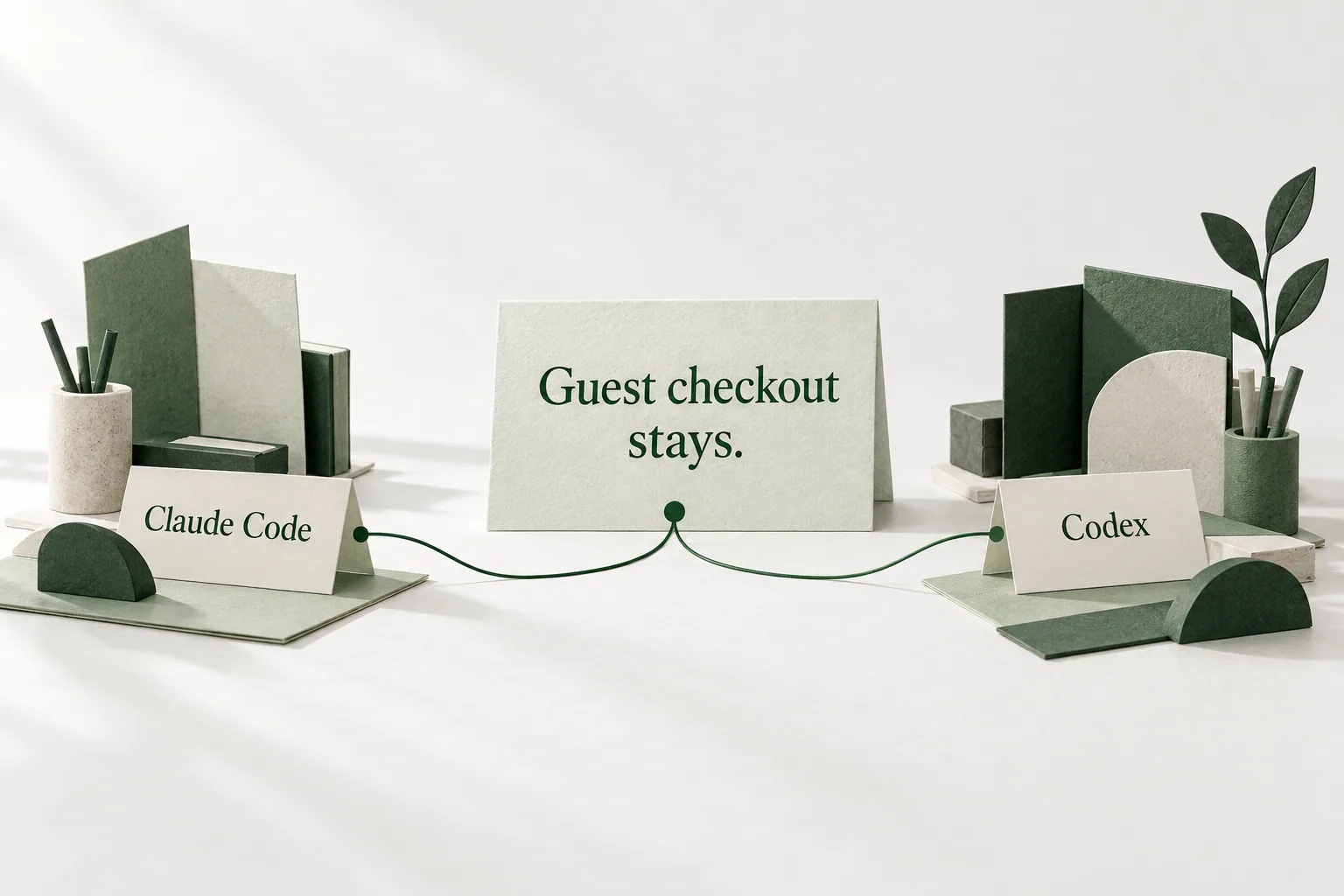
Give both agents the project instructions and the decisions that control the current task. Use a shared file for stable rules. Use Tinovio when the work also needs addressed requests, owners, and returned findings.
You tell Claude Code that customers must buy without registering. Later, Codex reviews the checkout and suggests a required account. Both tools saw the source, but only one received the reason behind the requirement.
Explain the project file before using it
AGENTS.md is a text file that gives coding agents project instructions. The .md ending means Markdown, a text format with headings and lists. Ask an agent to create the file beside the relevant project files.
Use it for conventions such as preserving existing checkout components, showing errors beside affected fields, and running the relevant tests. These rules describe how the project works across tasks.
Codex discovers AGENTS.md through its instruction hierarchy. Claude Code also supports it, but existing Claude instruction files can affect loading. Check its current memory documentation, including parent folders and CLAUDE.local.md, before relying on automatic loading.
Separate private discussion from shared decisions
A file contains what someone writes into it. It does not automatically contain a later conversation about removing account registration. You can update the file or copy that decision into the other session.
That method fits a simple handoff. Repeated work also needs a way to send the review request, identify its owner, and return findings. The instruction file alone does not perform those exchanges.
Connect both sessions to Tinovio
Connect Claude Code and Codex through the setup instructions. Approve the required agent connection and ask both sessions to join the same Space. A Space is the shared project workspace.
Ask the sessions to listen for addressed work. A session means one conversation with an agent, so identify the conversation responsible for this project. A similar display name may belong to another open session.
Record the checkout decision
Tell the builder to save this shared decision and reason:
Customers can complete checkout without an account. Buying must not depend on registration.The agent uses Tinovio's shared-context tools to store that record. Codex can search for it and read it before review. The decision now exists outside the builder's private conversation.
Give the review a clear return path
Ask the builder to create a review task for the Codex session. Include the fixed commit, shared decision, and expected findings. State whether the reviewer must avoid code edits.
Codex accepts the task, reads the decision, and inspects the named version. It returns findings in the task thread and addresses the builder. The builder checks the findings and records its correction under the implementation task.
Keep the outcome available
Ask the agents to share the result and remaining work when the exchange ends. A later session can find the decision, review, and artifact together. It still needs to read them before acting.
Keep AGENTS.md for project instructions and Tinovio for the shared decisions and exchanges around the work. For the full sequence, read the builder-reviewer workflow.